Facebook Cover Design for Business: A Template for Impact
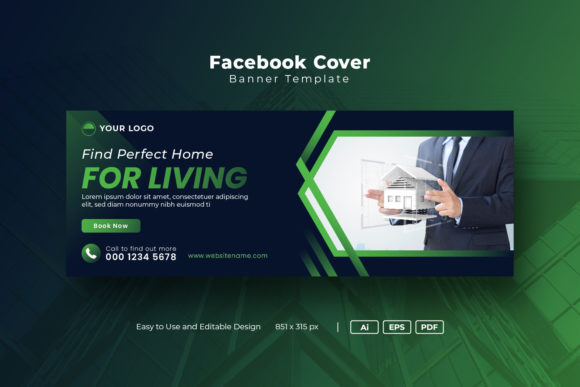
That prime piece of digital real estate at the top of your Facebook page does more work than you think. It’s the first handshake, the storefront window, the billboard on the digital highway. For a business, especially in visually driven fields like real estate, a generic or poorly sized image won’t cut it. A dedicated Facebook Cover Design for Business template solves this, providing a structured canvas that ensures your brand makes a powerful, professional first impression every single time someone lands on your page.
Beyond the Basics: What Makes a Template Truly Useful?
Not all templates are created equal. A high-quality template is more than just a pretty picture with a placeholder; it's a foundation built for efficiency and consistency. The true value lies in its architecture. Organized layers mean you're not digging through a chaotic file to change a line of text or swap a logo. You can isolate the headline, adjust the background, or modify a graphic element without accidentally breaking the entire design. This structure is what transforms a static file into a dynamic tool, allowing you to adapt a single professional design for various promotions, seasons, or campaigns while maintaining a cohesive brand look.
Think about the last time you tried to design a cover image from scratch. The hassle of remembering the exact pixel dimensions—1702 x 630 pixels for optimal clarity—finding fonts that don't cost a fortune, and aligning elements so they don't get cut off on mobile devices is a real time sink. A well-built template pre-solves these problems. The file is already sized correctly, the typography is set with free, commercially licensed fonts, and the composition has been tested to ensure key information remains visible across all devices. It’s a practical shortcut that doesn’t sacrifice quality.
The Real Estate Advantage and Other Visual Industries
For a real estate agent or agency, the Facebook cover is a critical marketing asset. It’s where you showcase stunning property photos, announce new listings, or promote an open house event. A generic photo often lacks context and fails to communicate value. A template designed for this purpose, however, includes strategic space for your branding—your logo, your agency name, your contact details—without overwhelming the featured property. It frames the home in a way that feels aspirational and professional, directly supporting your goal of attracting serious buyers and building trust in your expertise.
This principle of structured visual communication extends far beyond real estate. Consider how a small boutique could use the same design principles to highlight a new collection. A coffee shop might feature its seasonal latte alongside its hours and location. A freelance graphic designer could display a portfolio snippet with a clear call-to-action to view their work. The template provides the disciplined framework; you inject the personality and content that makes it uniquely yours. It’s about presenting your offerings in a clean, intentional, and engaging way that aligns with your broader brand identity.
Building Visual Consistency Across Your Brand
One of the greatest challenges for any growing business is maintaining a consistent visual language. Your Facebook page, Instagram profile, website, and printed materials should all feel like they belong to the same family. This is where a template system shines. By using a consistent design style—perhaps the same color palette, the same font pairing, and a similar layout approach—you create immediate recognition. When a follower sees your cover image, they subconsciously absorb your brand’s aesthetic. This repeated exposure builds familiarity and trust, which are cornerstones of customer loyalty.
Achieving this consistency manually is painstaking. A template, especially one provided in versatile formats like AI, EPS, and PDF, acts as a master key. You can open the same design file in Adobe Illustrator to create your Facebook cover, then easily adapt elements for an Instagram story graphic or a printed flyer. The organized layers and free font documentation ensure that anyone on your team—or any designer you hire—can produce on-brand materials without guesswork. This streamlines your workflow and protects the integrity of your brand’s presentation across every touchpoint.
Practical Steps for Customization and Impact
Getting started with a template is straightforward, but a few best practices will maximize its impact. First, resist the urge to overcrowd the space. The most effective covers often use a single, compelling focal point—like a property photo or a product shot—paired with minimal, clear text. Your business name and a concise value proposition are usually enough. Use the provided free fonts as a starting point, but ensure the typeface style matches your brand’s personality. A sleek, modern sans-serif font conveys efficiency and clarity, while a classic serif can impart tradition and reliability.
Before you finalize, always preview how the design looks on both desktop and mobile. Facebook’s interface crops images differently depending on the device. The key information in your 1702 x 630 pixel canvas should be centered in the "safe zone" to avoid being cut off. Once customized, use the cover image strategically. It’s not just a static decoration. Update it to reflect current promotions, celebrate milestones, or highlight seasonal offerings. This keeps your page looking active and relevant, encouraging visitors to engage further with your content, your products, or your services. It’s a small update with a significant impact on your page’s overall professionalism and appeal.